
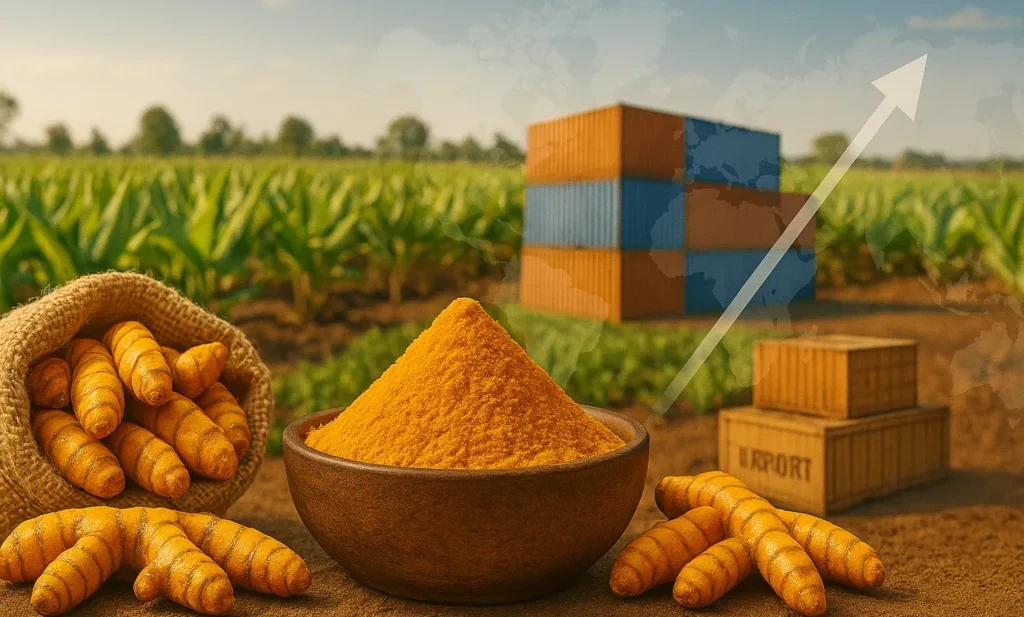
Turmeric, the golden spice of India, has transcended its traditional role in Asian cuisine to become a global superfood sensation. With the international turmeric market projected to reach over USD 5 billion by 2028, understanding this valuable commodity is essential for buyers, distributors, and health-conscious consumers alike.
The Journey from Farm to Export
Cultivation and Harvesting
Turmeric (Curcuma longa) thrives in tropical climates with well-distributed rainfall. India, particularly the states of Telangana, Maharashtra, Tamil Nadu, and Andhra Pradesh, accounts for nearly 80% of global turmeric production.
The cultivation cycle spans approximately nine to ten months:
- Planting: June to July, during the monsoon season
- Growth: Requires consistent moisture and warm temperatures
- Harvesting: January to March, when leaves turn yellow and dry
- Processing: Immediate boiling, drying, and polishing to preserve quality
Processing Methods
After harvest, fresh turmeric undergoes several critical processing steps:
- Cleaning: Removing soil and root fibers
- Boiling: Cooking rhizomes for 45-60 minutes to remove raw odor, reduce drying time, and enhance color
- Drying: Sun-drying or mechanical drying to reduce moisture to 8-10%
- Polishing: Manual or mechanical polishing for better appearance
- Grinding: Converting dried turmeric into fine powder
Quality processing preserves the curcumin content, color intensity, and aromatic properties that determine market value.
Understanding Turmeric Quality Grades
Turmeric quality is determined by several factors:
Color: Deep orange to golden yellow indicates high curcumin content. The Erode and Alleppey varieties are prized for their intense color.
Curcumin Content: Premium grades contain 3-5% curcumin, the active compound responsible for turmeric’s color and health benefits.
Moisture Level: Export-quality turmeric maintains 8-10% moisture to prevent mold growth during storage and transit.
Aroma: Fresh, earthy aroma without musty or moldy odors indicates proper drying and storage.
Purity: Free from artificial colors, additives, and foreign matter.
Major Turmeric Varieties
Alleppey Finger (Kerala)
- High curcumin content (4-5%)
- Deep yellow color
- Preferred for pharmaceutical and cosmetic use
Erode Variety (Tamil Nadu)
- Excellent color and aroma
- 2-4% curcumin content
- Popular in food industry
Rajapuri and Sangli (Maharashtra)
- Bright yellow color
- Good flavor profile
- Widely used in spice blends
Nizamabad Bulb (Telangana)
- Distinctive flavor
- Moderate curcumin levels
- Preferred for culinary applications
Health Benefits Driving Global Demand
Turmeric’s surge in global popularity stems from extensive research into its health properties:
Anti-inflammatory Properties: Curcumin reduces inflammation markers in the body, potentially helping with arthritis and chronic inflammation.
Antioxidant Effects: Neutralizes free radicals and boosts the body’s own antioxidant enzymes.
Brain Health: May improve cognitive function and reduce risk of brain diseases.
Heart Health: Improves endothelial function and may reduce heart disease risk factors.
Digestive Support: Traditional use for digestive health is supported by modern research.
Skin Care: Anti-inflammatory and antimicrobial properties make it popular in cosmetics.
Note: These statements are based on research findings. Consumers should consult healthcare professionals for medical advice.
Global Market Trends
Growing Applications
Beyond traditional food use, turmeric now appears in:
- Dietary supplements and capsules
- Functional beverages (turmeric lattes, health drinks)
- Cosmetics and skincare products
- Natural food colorants
- Pharmaceutical formulations
Regional Demand Patterns
North America: Dominated by supplement market, focusing on curcumin extract products
Europe: Growing demand for organic and fair-trade certified turmeric
Middle East: Traditional use in cuisine combined with wellness trend adoption
Asia-Pacific: Largest consumer region with both culinary and medicinal use
Quality Assurance for Buyers
When sourcing turmeric, buyers should verify:
- Laboratory Certificates: Confirming curcumin content, moisture levels, and absence of contaminants
- Organic Certification: If targeting organic markets
- Pesticide Residue Reports: Ensuring compliance with importing country limits
- Microbial Testing: Confirming acceptable levels of bacteria and pathogens
- Heavy Metals Testing: Especially important for pharmaceutical-grade turmeric
Storage and Handling Best Practices
To maintain turmeric quality:
- Store in cool, dry conditions (below 25°C)
- Protect from direct sunlight and moisture
- Use airtight containers to prevent aroma loss
- Avoid contamination with other strong-smelling products
- Regular quality checks during long-term storage
Future Outlook
The turmeric market continues evolving with several trends:
- Increasing demand for standardized curcumin extracts
- Growth in organic and sustainably sourced products
- Innovation in bioavailability-enhanced formulations
- Expansion into new product categories
Conclusion
Turmeric represents one of India’s most valuable agricultural exports, combining traditional heritage with modern health science. For buyers seeking to enter or expand in this market, understanding quality parameters, processing standards, and market dynamics is crucial for success.
ASP VYAPTHAA Global Exports specializes in premium-grade turmeric powder sourced from India’s finest growing regions. We provide complete quality documentation, competitive pricing, and reliable export services.
Interested in premium turmeric? Reach out to our team at info@aspvyapthaa.com or call +91-9391713809 for product specifications and pricing.